Swedish brewers accuse Systembolaget of double standards after being shut out of its annual Oktoberfest beer release, while German breweries outside Munich and a Czech beer brand are still allowed to take part.
Oktoberfest may be over, but Sweden’s state alcohol monopoly is now facing criticism over its interpretation of EU rules protecting the name Oktoberfestbier. The dispute centres on why foreign beers labelled Festbier and Volksfestbier are accepted while Swedish breweries face restrictions.
Systembolaget is Sweden’s state-owned alcohol retail monopoly, offering both a regular beer range and temporary seasonal releases. Until 2023, these included an annual Oktoberfest release open to Swedish breweries. That year, no fewer than 43 locally produced beers were launched – but it was also the last time Swedish brewers were allowed to take part.
The change followed the EU’s registration of Oktoberfestbier as a protected geographical indication. Under the rules, beer using that name must be brewed within the city of Munich and meet several other production requirements. In practice, the protection covers the traditional Oktoberfest beers produced by Munich’s six historic breweries: Augustiner, Hacker-Pschorr, Hofbräu, Löwenbräu, Paulaner and Spaten. But Systembolaget has gone further than simply preventing Swedish breweries from using the protected name. Email correspondence between Systembolaget and the Swedish Food Agency, reviewed by Beernews, reveals uncertainty over how the rules should be interpreted and where the boundaries should be drawn.
Systembolaget ultimately decided to remove the opportunity for Swedish breweries to participate in the seasonal release altogether. Several breweries are now questioning that decision.The problem, they argue, is that Systembolaget has continued to sell foreign beers in its Oktoberfest range under names such as Festbier, Volksfestbier and Festmärzen, even when the breweries themselves are outside Munich and therefore not covered by the geographical protection.
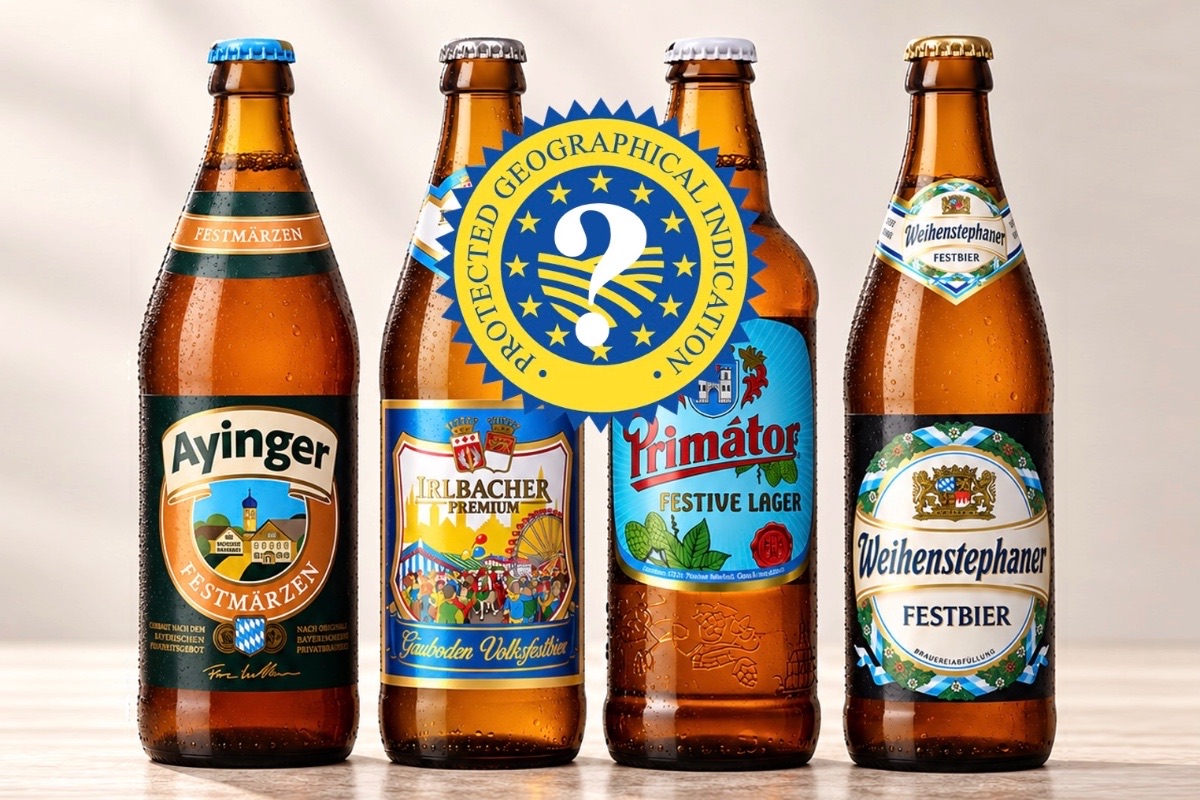
This year’s selection included Weihenstephaner Festbier, Ayinger Festmärzen and Irlbacher Volksfestbier. All three are brewed outside Munich. The range also included Primátor Festive Lager from the Czech Republic.
For the Swedish breweries Beernews has spoken to, this raises a question: if names such as Festbier and Festbock are considered unacceptable references to Oktoberfestbier, why are similar names allowed for foreign beers that do not qualify for the protection either?
“Of the eight Oktoberfest beers in Systembolaget’s seasonal temporary range, only four come from Munich. Weihenstephaner, Irlbacher, Ayinger and Primátor do not. Yet Systembolaget launches all of them under the heading Oktoberfest beers, despite the protected geographical indication,” says one Swedish brewer, who wishes to remain anonymous.
Another brewer questions whether Systembolaget has gone considerably further than the EU rules require.
“The geographical protection applies specifically to the name Oktoberfestbier. So why can’t we call a beer Festöl (the Swedish word for festival beer)? It feels as though Systembolaget seized the opportunity to get rid of a seasonal release featuring more than forty Swedish beers, using the EU decision as justification.”
A third brewery sees a clear contradiction.
“You can’t claim to apply a very strict interpretation and then turn a blind eye when it comes to certain other beers. That’s a double standard.”
Systembolaget, however, says it has received no complaints or requests from Swedish breweries on the matter.
“Neither we nor the Swedish Food Agency have made any new interpretation of the terminology since 2024. As in recent years, we are launching only traditional Oktoberfest beers from the Munich area. This year, there are eight products in the range. From a customer perspective, beers from Munich have always sold the most and been the most relevant to customers. We have also received no comments or requests concerning Oktoberfest beers from local breweries,” says Jenny Gabrielsson, category manager for beer at Systembolaget.
A statement that prompts further criticism from several breweries.
“Systembolaget made it very clear that there would be no such release. So it’s hardly surprising that they haven’t received any requests from breweries,” says one brewer.
Another Swedish brewery describes how its beer, named Festbock, was rejected in 2024.
“I had already printed the first batch of labels and brewed the first batch of beer when the rejection came. Naturally, I haven’t tried to release any similar beers since, because I assumed they would be rejected again. Hence the lack of ‘comments or requests’ from us.”
A third brewer points to the popularity of the seasonal releases before they were discontinued.
“When the opportunity existed, plenty of breweries launched beers in the local and small-scale Oktoberfest range. There was clearly demand from both breweries and customers.”
So why does Systembolaget continue to allow foreign breweries outside Munich to sell festival beers in its Oktoberfest range while Swedish breweries are excluded?
Jenny Gabrielsson explains why the Czech Primátor Festive Lager is still included in the Oktoberfest range.
“The Czech beer remains in the Oktoberfest release because it was purchased for that range before the geographical indication was registered. These purchases include contractual arrangements for repeat orders if a product sells above a certain threshold, which this one has done. But we will not actively seek any Oktoberfest beers from outside the Munich area in future,” she says.
That explains why the Czech beer was still allowed to be sold this year. It does not, however, answer the question of the German Festbier beers brewed outside Munich.
EU protection applies to the registered name Oktoberfestbier and sets out which beers are entitled to use it. Systembolaget’s approach goes further, adopting a precautionary interpretation under which other names and presentations may also be rejected if they are considered to evoke the protected designation.
And that is what Swedish breweries now are challenging. If the rules are to be interpreted so strictly, they argue, the same interpretation should apply to every brewery, regardless of where its beer is produced.
Read the Swedish article here.
–
Every month, Beernews selects an article to publish in English – for readers outside of Sweden who want to follow the Swedish beer scene.